
PJM's 20 years of solitude
The murky world of electric load forecasting

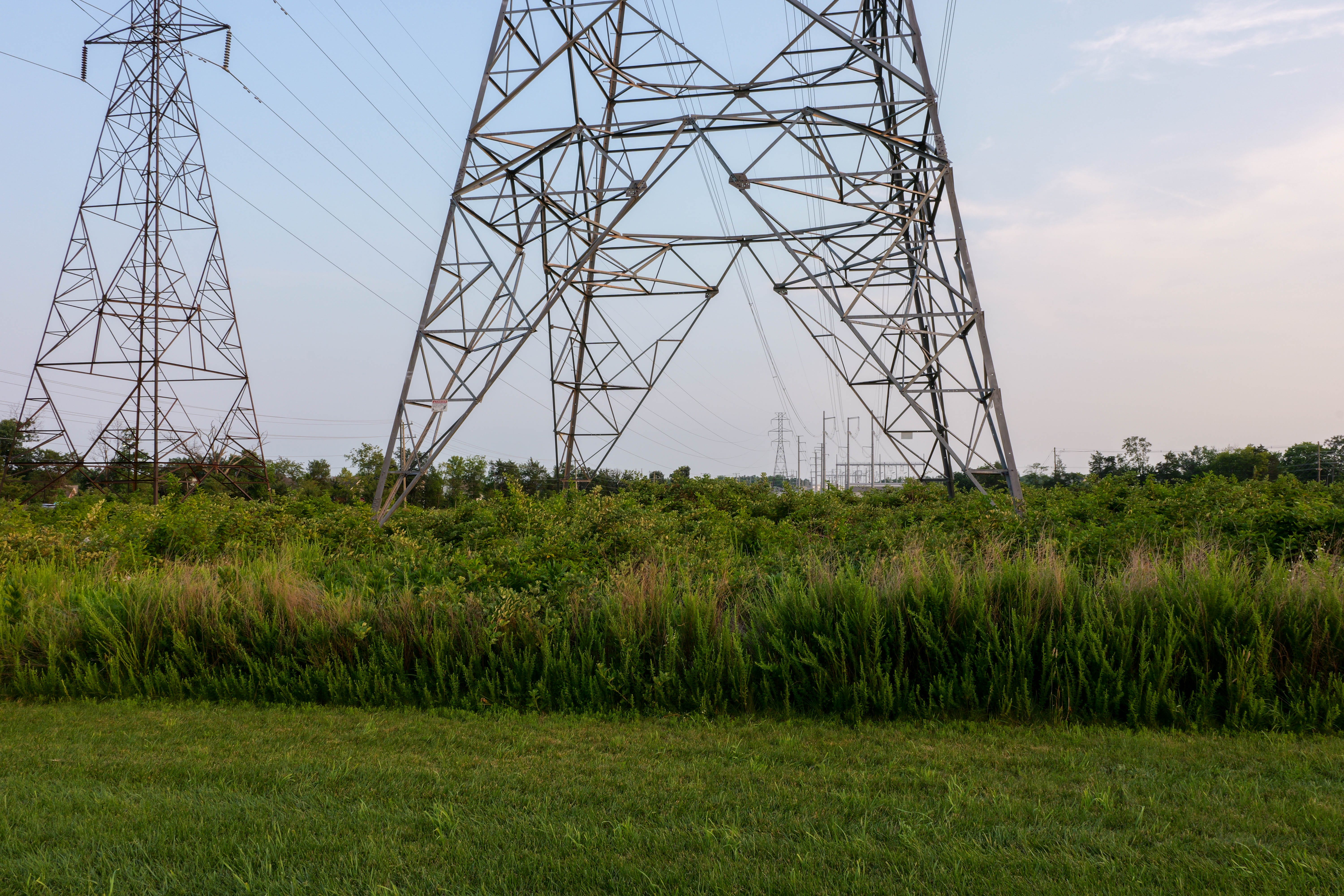
Yogi Berra famously said, “It's like déjà vu all over again.” Nearly 20 years ago, in June 2007, PJM Interconnection, the regional grid operator for 13 states and the District of Columbia, approved the Potomac Appalachian Transmission Highline (PATH), PATH died a long slow death with the corporate partnership finally dissolving in 2023. Then, a little over a year later, PJM approved Valley Link North, which essentially follows the same route as PATH, reuniting the old PATH team and adding new players.
PATH was a joint project of American Electric Power and Allegheny Energy. According to PJM it was essential to maintaining transmission grid reliability in 2014. It’s price tag was $1.8 billion. The 200 mile long, 765 kV electric transmission line was to start at the substation next to the John Amos coal-fired power plant, operated by Applachian Power, a subsidiary of American ElectricPower, in West Virginia, and wind through West Virginia, Virginia and end up in Frederick County, Maryland.
Critics noted that construction of this line would increase the dependence of the East Coast on coal-fired power plants.
When PATH came before the Virginia State Corporation Commission (SCC) In October of 2009, Robert Fagan, a senior associate at Synapse Energy Economics, testified on behalf of the Sierra Club. He said that PJM’s assessment was based on old data.
“By PJM’s own reckoning, these data are outdated and contain too high an estimate of peak load growth.”
A little over a month later American Electric Power and Allegheny Energy withdrew the PATH application before the Virginia SCC.
Despite the withdrawal of the Virginia application PATH was still going. However in February 2011, PJM ordered the sponsoring transmission owners to suspend their development efforts on the PATH project so that PJM could conduct additional analysis to assess the need for PATH. Finally, in August of 2012 PJM removed PATH from its plans. PJM said that power on the East Coast was no longer needed citing a slow economic recovery that reduced demand for electricity. The 2008 housing bubble and subsequent slow economic recovery had killed PATH.
In December 2023 at a meeting of the Federal Energy Regulatory Commission (FERC) the corporate partnership for PATH was finally dissolved. Then FERC Commissioner Mark Christie, now Chairman, wrote:
“PATH graphically illustrates the inherent dangers in approving for regional cost allocation long-distance projects based on a prediction (i.e., a guess) of what the generation mix will be in 20 years or more.”
Less than two years after the PATH team of American Electric Power and FirstEnergy Corp, which acquired Allegheny Power in 2011, was dissolved, PJM approved Valley Link North in February 2024. The Valley Link North roster includes Dominion Energy; Transource, a partnership between American Electric Power and Evergy; and FirstEnergy Transmission, reuniting the original PATH team and adding new players, Dominion Energy and Evergy. Valley Link North, just like its PATH predecessor, is another 765 kV line more that 200 miles long, also beginning at the John Amos coal-fired power plant in West Virginia and ending in Frederick County, Maryland. And, just like before, the need for Valley Link North is based on PJM’s load forecasts and PJM’s computer models looking towards what might happen in 2029 and 2032.
PJM was wrong before, could it be wrong again? At its most basic level, forecasting or statistical modeling, requires one variable that predicts another. In a simple model these variables have a linear relationship. The variable that is the predictor is called the independent variable. The predicted variable is called the dependent variable. In our simple load projection model, data center power demand is the independent variable, and the total load is the dependent variable. PJM’s model is more complicated but this is the basic idea behind modeling.
Strong independent variables show historical patterns in their relationship with the dependent variable. For example, during the summer when temperatures increase, people use their air conditioners more and power consumption goes up. PJM knows this from years of data, and data on temperature fluctuations is widely available, so a model that predicts load based on temperature is very reliable.
It follows then, that if we know data centers require a lot of power, and we think the number of data centers, the independent variable is increasing and will continue to increase, we would conclude that our need for power, the dependent variable, will continue to increase for the foreseeable future.
In response to a question about alternative transmission technologies unrelated to this story, PJM spokesperson, Jeff Shields told the Data Center Report that a large part of the load increase that neccesitates Valley Link North can be attributed to data centers,
“The forecasted demand growth is driven in part by data center load additions and, to a much lesser extent, the electrification of vehicles and building heating systems.”
But the problem is PJM, doesn’t really know what the data center load is.
Monitoring Analytics, PJM’s independent market monitor, said PJM lacks the necessary information to accurately predict load in their recent August quarterly report,
“The basis for load projections depends primarily on the projections of data center load which are highly uncertain and for which PJM has limited information about exact location and specifications.”
The utilities provide PJM with their load forecasts, and it’s not just PJM that is unclear about the details surrounding data center load, everyone else is too. “The underlying facts about the need are all proprietary,” says Chris Miller, president of the Piedmont Environmental Council.
It is widely know that load forecasting is highly speculative when data centers are involved. Stephen Bessasparis, senior consultant at Energy + Environmental Economics (E3), writes “…at the broadest level, it is understood that much of the current forecasted data center energy demand is speculative.” Carbon Direct, a New York based energy and climate solutions company agrees, They write that, “Traditional load forecasting was built for predictable, gradual demand growth, not for the scale, uncertainty, and dynamic behavior of data centers.”
In addition, utilities that submit their data to PJM have an incentive to inflate their load forecasts. Regulated utilities don’t make money by selling electricity, they make money by building infrastructure. Conor Harrison an associate professor of economic geography at the University of South Carolina writes,
“They can use those predictions to justify overspending on new equipment, such as wires, transformers and substations, to handle those future loads. The ratepayers pick up the tab, and the company makes its 10% profit, even if the new equipment ends up being unnecessary.”
Last April, Governor Abigail Spanberger, D-Va., signed HB892 into law ordering the SCC to initiate a proceeding, by March 1, 2027, to investigate electric load forecasting practices by Dominion Energy, Appalachian Power Company, and electric distribution cooperatives.
This year PJM decreased its load projections through 2032 compared to 2025 estimates, “due to updates to the electric vehicle and economic forecasts as well as improved vetting of requested adjustments for data centers and large loads.”
This is not the first time PJM’s load projections have declined. Between 2013 and 2021 PJM’s summer peak demand forecast for 2028 declined from over 180,000 MW to a little over 150,000 MW.
PJM said this was because during those years, load shifted from the manufacturing sector to the less energy-intensive service sector, more energy-efficient appliances were adopted, and a significant amount of behind-the-meter solar generation was added.
Unpredictable changes in consumer behavior, economic uncertainty, and advances in technology complicate the load forecasting process, raising the question, will the AI infrastructure data center buildout continue indefinitely and what happens to PJM’s load projections if it doesn’t?
At the end of June, The Wall Street Journal reported that the Bank for International Settlements, stated in their annual report that an AI crash would begin with tech companies investing too much money on data center construction.
“This time,” writes the Journal, “the bust could start with overinvestment in AI infrastructure from tech-company spenders. Once it becomes clear that returns aren’t measuring up to the scale of those outlays, a pullback in financing and stock prices could ensue.”
Data center construction has tech companies digging themselves into debt. According to CNBC, Moody’s Ratings says the AI infrastructure buildout is causing cash-rich corporations like Microsoft and Alphabet (Google) to rely on debt, stock sales, and “off balance sheet moves.” They warn that this level of spending is threatening the credit quality of Microsoft, Amazon, Alphabet, Meta, Oracle and CoreWeave.
Tech companies are projected to spend more than $3 trillion on the AI buildout and the level of debt is significant enough that companies are turning to creative accounting methods. At the end of July Bloomberg Tax reported that tech companies are reviving accounting methods that brought down Enron, and using financing methods that allow them to keep debt, incurred for the AI infrastructure buildout, off their balance sheet. Bloomberg Tax writes,
“Substantial infrastructure costs tied up in the financing structures aren’t flowing through the parent company’s financial statements, offering unaware investors a rosier view of performance and leverage.”
The housing bubble toppled PATH. We’ll just have to wait and see if an AI bubble does the same to Valley Link North.
The Data Center Report contacted PJM and Dominion Energy for this story and did not receive a response.